
Retail Real Estate Brief · September 20, 2026
The headline of 2025 was subtraction. The headline of 2026 is placement. Store openings have quietly overtaken closings, and the retailers doing the opening — warehouse clubs, grocers, discounters, and a fast-fashion giant finally serious about America — are reshaping who signs the leases and what the boxes are worth. This week, Costco put a number on it.
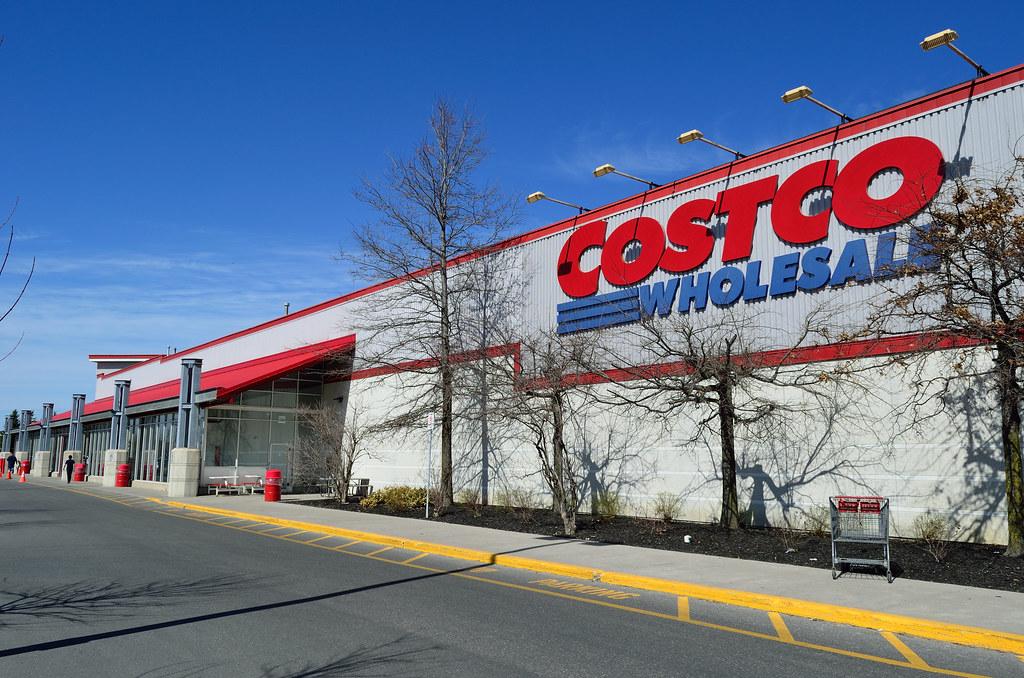
Costco Doubles Down on the Box
Costco confirmed it will open 14 new warehouses across the U.S. and Canada by year-end — five in October and nine in November. The October wave lands in Lee’s Summit, Missouri; The Colony, Texas; Amherst, New York; Lawrence, Kansas; and Camarillo, California. November adds South Meridian, Idaho; Vallejo, California; Chandler, Arizona; Newport News, Virginia; Franklin, Wisconsin; and four Canadian locations.
The near-term count matters less than the posture behind it. CEO Ron Vachris has committed the company to 30-plus new warehouses a year for the next decade — a rare, durable source of large-format absorption at a moment when almost no one is building speculative big boxes. Costco reports fiscal Q4 results September 24; the real estate story is already written.
~3.8M SF
Average quarterly net absorption projected for U.S. retail in 2026 — positive, but well below the 9.8M SF five-year average. Occupancy is holding on scarcity, not on a building boom.
The Numbers: Openings Overtake Closings
After the closure wave that defined 2025, leasing has normalized. Analysts at CoStar, Coresight Research, and Telsey Advisory Group put 2026 U.S. store openings up roughly 4% year over year while closings decelerate by a comparable margin. Coresight’s read: about 5,500 openings (up 4.4%) against roughly 7,900 closings (down 4.5%) — the gap narrowing from both ends.
Beneath the count is a leasing market that is quietly healthy: more than 20,000 new leases totaling roughly 75 million square feet committed in the first half, national vacancy tracking near 5.0%, and a historically thin construction pipeline that keeps landlords in the stronger seat. The scarcity is doing the work that new supply used to do.
Grocery Is Still Writing the Leases
The necessity anchor keeps proving why investors pay up for it. Amazon this week committed more than $230 million to raise pay and expand benefits for over 100,000 Whole Foods employees, lifting average store-associate wages above $21 an hour beginning September 28 and total compensation past $29. Read it as a labor story if you like; owners of grocery-anchored centers should read it as a signal about how hard the category intends to defend its store base.
Expansion tells the same story. Aldi is on pace for 180-plus U.S. openings this year across 31 states, pushing toward 2,800 locations on the way to a 3,200-store target. Sprouts Farmers Market has roughly 40 stores opening this fiscal year and nearly 150 approved, with a long runway past 480 locations. The grocers aren’t just renewing — they’re taking new space.
Value and Discount Lead the Expansion Engine
The categories opening stores are the categories winning the consumer. Dollar General is opening roughly 450 units this year. Target beat second-quarter estimates on a 5.3% revenue gain, raised full-year guidance, and is spending about $5 billion on 30 new stores and 130-plus remodels. Five Below posted a quarter that captures the moment — earnings up 107% and revenue up 22.8%, its fifth straight quarter of double-digit comparable sales. Value, convenience, and treasure-hunt merchandise are pulling traffic; big-ticket discretionary is not.
Fashion Returns to Main Street
Inditex — parent of Zara — is treating the U.S. as its next growth engine, its second-largest market after Spain. The company plans to reach roughly 110 U.S. stores by year-end and 20 U.S. projects (new stores, expansions, and refurbishments) by the end of 2027, with new Zara stores slated for Denver, Phoenix, and Pittsburgh and Bershka and Massimo Dutti heading to New York. Second-quarter sales hit €11 billion (about $12.8 billion), with August currency-adjusted sales up 9%. Large-format apparel demand for A-quality space is real again — a welcome development for owners holding well-located big boxes.
Backfilling the Boxes
The other side of the ledger is where the opportunity sits for retail owners. A&G Real Estate Partners is preparing to auction 59 Saks Off 5th and Last Call leases totaling about 1.7 million square feet — second-generation space that off-price and discount operators will move to absorb. Burlington alone is taking 45 former Joann boxes through bankruptcy proceedings on its way to 110 net new stores. And Walgreens has walked back its own retrenchment, now expecting to close fewer than 100 stores in 2026 versus the ~700 its original optimization plan implied.
This is the backfill economy in practice: fewer bankruptcies, faster re-tenanting, and a bidding line of value operators for the space that does come back. The empty box is a leasing opportunity, not an obituary.
Capital Markets: Net Lease Holds, the Market Splits
Single-tenant net lease cap rates held at roughly 6.80% at mid-year 2026, but the average masks a widening split. Investment-grade tenants on long leases draw deep, competitive buyer pools; weaker credit and short term price further apart by the quarter. Premium grocery-anchored centers with national operators continue to trade in the 5%-6% range, while regionally anchored centers sit closer to 7%-8.5%. A single prototype 7-Eleven in Madera, California traded for $12.9 million on a 15-year triple-net lease — a reminder of what credit and term are worth when financing costs are still elevated.
The Owner’s Takeaway
Three things are true at once in this market: openings are outrunning closings, the growth is concentrated in necessity and value retail, and quality real estate is separating decisively from the rest. For owners of supermarket-anchored and well-located retail, that is a strong hand — provided you can turn vacated space quickly and lease to the operators actually expanding. The tenants are moving. The question is whether your box is on their list.
Sources
CoStar, “Store openings overtake closings as retail leasing normalizes,” September 2026.
Chain Store Age, “Store Expansion News: September update” and “Report: Discount sector leading mid-year store opening growth,” September 2026.
Retail Dive / Grocery Dive, “Amazon invests over $230M in benefits, pay for Whole Foods store employees,” September 11, 2026; About Amazon corporate announcement, September 2026.
Reuters / RTE, “Zara owner Inditex looks to US for next phase of growth,” September 11, 2026; FashionNetwork, “Inditex’s 2026 retail strategy,” September 2026.
Daily Mail / newsbreak.com, “Costco expansion frenzy… 14 new stores by end of 2026,” September 2026; Costco Wholesale investor materials.
LSEG Lipper Alpha, “Q2 2026 U.S. Retail Scorecard,” September 3, 2026 (Target, Five Below results); company 8-K filings.
Axios, “Discount grocer Aldi to open more than 180 stores in 2026,” 2026; Sprouts Farmers Market investor disclosures.
Silber Properties, “The Net Lease Market at Mid-Year: Cap Rates Hold as the Market Splits in Two,” 2026; ICSC Exchange, “Lending Hits High, Redevelopment Breaks Ground,” September 2026.

Ken Schuckman
President & CEO, Schuckman Realty Inc.
Ken Schuckman is President & CEO of Schuckman Realty Inc., a retail-focused commercial real estate brokerage founded by Stanley Schuckman in 1978 in Hicksville, NY. With 30+ years of experience specializing in supermarket-anchored shopping centers, Ken is a CoStar Power Broker and member of X-Team Retail Advisors. He is also Co-Founder & Principal of BTF Capital Fund.
© 2026 Schuckman Realty Inc. · Hicksville, NY · All rights reserved.