
By Ken Schuckman | Schuckman Realty Inc. | September 17, 2026
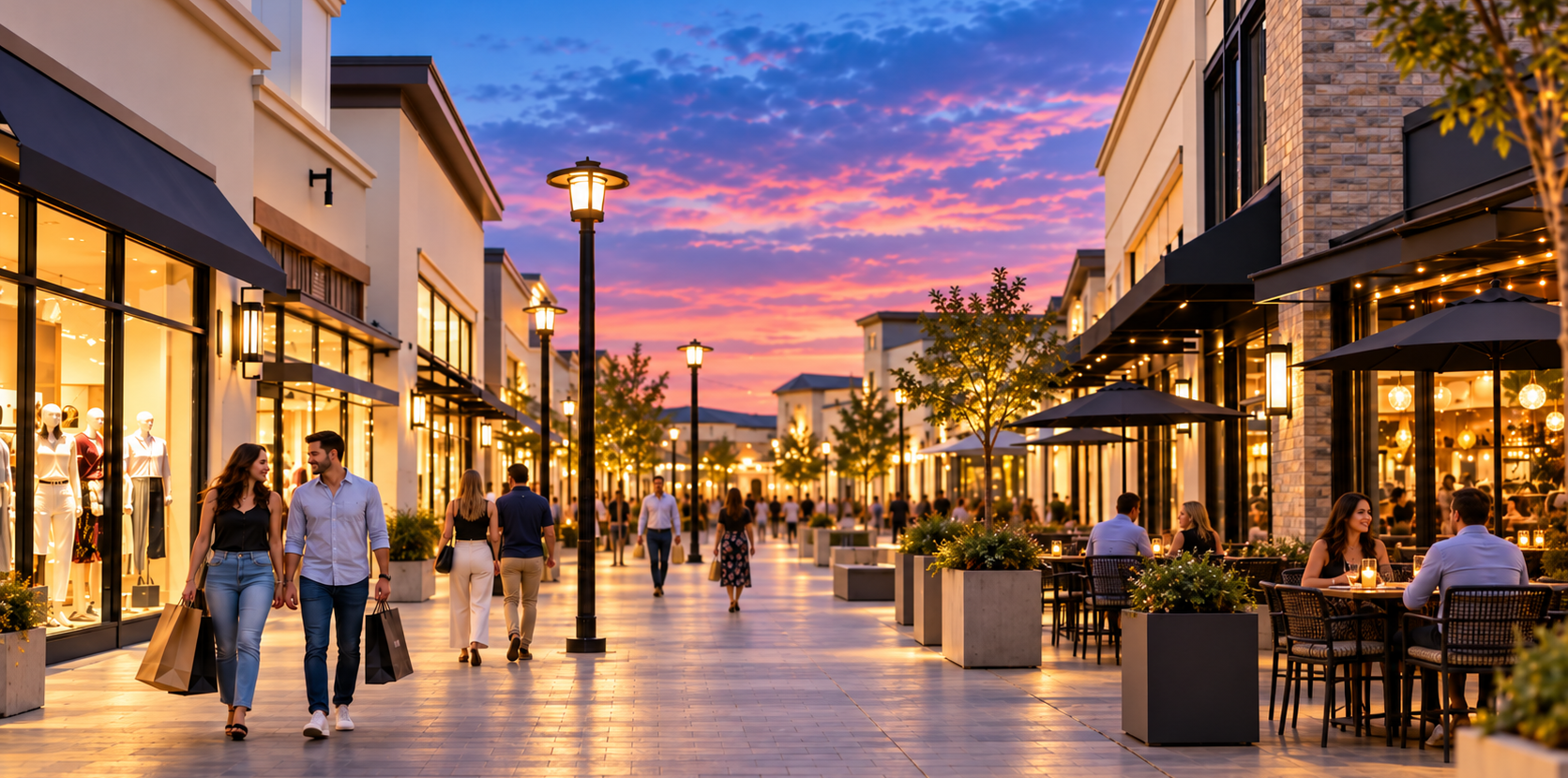
Enclosed malls just posted the best year of any real estate sector in the country. That’s the headline. The more useful story for those of us who lease space every day is what it tells you about physical retail — and why the quiet, necessity-driven centers I’ve spent 30 years on remain the smartest place to put a dollar.
Let me start with the numbers, because they’re real. According to Green Street data reported by The Wall Street Journal, mall values rose 13% over the past year — the top performer among the ten property sectors Green Street tracks, and more than double the gain across commercial real estate overall. After a decade of obituaries, that’s a remarkable turn.
Here’s the part the headlines gloss over: a big piece of this recovery is scarcity. The Journal, citing Green Street, notes the U.S. mall count has shrunk to roughly 900 after about 200 closures since 2008. When you take 200 competitors out of a market, the survivors get stronger by default. Occupancy tightens, rents firm up, and the best-located centers — the ones landlords have poured capital into with luxury tenants, chef-driven restaurants, and entertainment — start to look like trophy assets again. And it isn’t only scarcity doing the work: as Connect CRE noted, resilient consumer spending and limited retailer bankruptcies are both working in the sector’s favor.
Morgan Stanley’s Ronald Kamdem put it plainly to the Journal: “In terms of how we think about the malls today fundamentally, this is probably the best it’s felt post-Covid.” The capital markets agree. Simon Property Group, the largest mall owner in the country, has been outrunning the S&P 500 over the past year and blew past its old 2016 record share price in July. Unibail-Rodamco-Westfield, which announced it was walking away from the U.S. four years ago, is now spending close to $1 billion this year to buy out partners and take full control of Westfield UTC in San Diego and Westfield Southcenter near Seattle. Its CEO, Vincent Rouget, told the Journal the company is seeing “the type of rent growth that we haven’t seen since the beginning of the 2010s,” with the American portfolio now outgrowing the rest of URW’s holdings worldwide. When a seller that left the table comes back and writes a billion-dollar check, pay attention.
And it isn’t only the trophy owners. CBL Properties — which spent a year in post-pandemic bankruptcy — has seen its stock climb 48% since January while shedding weaker malls and buying five new ones since last July. CEO Stephen Lebovitz told the New York Post it’s been “even better than we had hoped.” That breadth matters: when a mid-tier operator that nearly went under is refinancing and expanding, the recovery isn’t just three coastal trophies.
“The comeback isn’t really about the mall. It’s about people deciding, again, that they want to shop, eat, and gather in physical space. That trend never left necessity retail.”
Why I read this as validation for open-air
I lease supermarket-anchored shopping centers across Long Island and the New York metro. That’s my lane, and it has been for three decades. So when I see malls leading the pack, I don’t read it as “malls won.” I read it as the market re-pricing physical retail as a durable asset class — and the open-air, grocery-anchored centers I work in have been quietly delivering that durability the entire time.
Think about what actually drove the mall bounce: reinvention and scarcity. Now compare that to a well-located grocery-anchored center. The anchor is a business people visit one to three times a week whether the economy is up or down. The traffic doesn’t depend on a luxury renovation or a new food hall to show up — it shows up because people need groceries, prescriptions, a haircut, a slice. That’s the foot traffic malls are spending nine figures to manufacture, and it’s baked into the necessity center from day one.
There’s also a capital-intensity story. A mall repositioning that swaps a dead department store for luxury and entertainment is expensive, slow, and never really finished. Even the bulls sound a note of caution here. Mariner Investment Group’s Bob Neighoff told the trade press, “Unlocking the dirt is the true value of the mall,” adding that he’s “a little more cautious on the actual retail experience of the mall being something to hang your hat on.” Translation: a lot of the mall thesis is really a land and redevelopment play. Open-air necessity centers don’t need that bet to pencil. The retail experience already works.
What I’d actually watch
None of this means the mall story is fake — it’s the opposite. It’s a sign that after years of “retail is dead” noise, capital is flowing back into brick-and-mortar because the fundamentals held. That tide lifts the whole sector, and I expect it to keep pulling investor attention toward well-tenanted retail of every format.
But if you’re deploying capital, I’d separate the headline from the strategy. The mall gains are concentrated in a shrinking pool of trophy properties that got there through heavy reinvestment and a lot of closures underneath them. The grocery-anchored center offers a lot of the same upside — resilient traffic, rent growth, defensive occupancy — with a fraction of the capex risk and a tenant base that doesn’t blink in a downturn.
The mall comeback is real, but read it correctly: the market is re-rating physical retail, not malls specifically. That’s a green light for grocery-anchored and open-air centers. If you own necessity retail in a strong trade area, you’re holding the asset the mall guys are spending hundreds of millions trying to recreate — resilient, need-based traffic. My advice to owners: don’t chase trophy-mall economics. Underwrite the anchor, protect your occupancy, push rents where the demand supports it, and let the capital that’s rediscovering retail come to you.
Sources
The Wall Street Journal, “The Mall Comeback Is Here” (Real Estate newsletter, September 16, 2026). wsj.com
The Real Deal, “Malls, Yes Malls, Pace Commercial Real Estate Value Gains” (September 15, 2026). therealdeal.com
New York Post, “Malls Are Making a Comeback” (September 14, 2026). nypost.com
Connect CRE, “Malls Rebound to Become Top-Performing U.S. CRE Sector” (September 14, 2026). connectcre.com
© 2026 Schuckman Realty Inc. · Hicksville, NY · All rights reserved.