
The second-quarter earnings reports are in, and they tell a clear story: the American consumer has not stopped spending — but they have become ruthlessly selective about where. Value, necessity, and everyday relevance are winning; discretionary and big-ticket are waiting. For those of us who own, lease, and trade retail real estate, the quarter was less a set of stock-price headlines than a map of which boxes, which tenants, and which centers will command capital over the next cycle.
The Necessity Premium Shows Up in the Numbers
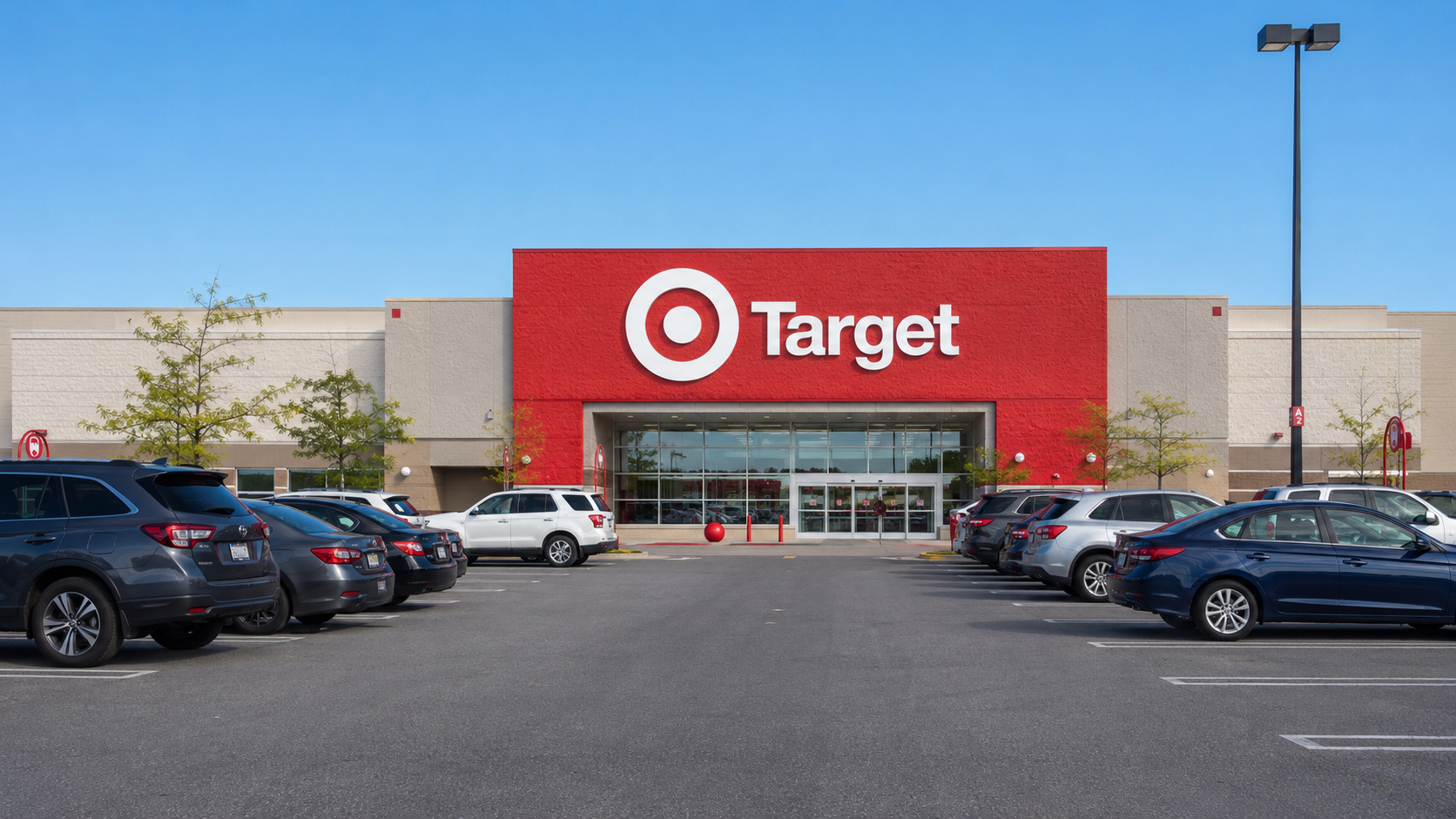
Target reopened the conversation on August 19 with a quarter that beat plan on nearly every line: comparable sales up 3.8%, driven by a 3.6% increase in comparable traffic — customers coming through the door, not just spending more per trip. Net sales grew 5.3%, and the retailer raised its full-year outlook to roughly 5% sales growth. Management pointed to same-day delivery growth north of 25% and digital comps up 8.7% as evidence that the store and the screen now work as one system.
The off-price and warehouse-club operators told the same story with even more force. TJX — parent of T.J. Maxx, Marshalls, and HomeGoods — posted $15.2 billion in net sales, up 5%, with comparable sales up 4% and margins well above plan, and raised its full-year earnings guidance. BJ’s Wholesale reported comparable club sales up 11.9% (3.1% excluding gasoline), membership fee income up 9.9% to a record 8.5 million members, and lifted its own EPS outlook. Home Depot beat on both the top and bottom lines.
The exception proved the rule. Lowe’s struck the most cautious tone of the group: households are still investing in their homes, but they continue to defer the larger discretionary projects. Professional demand is holding; DIY big-ticket is not. In a single week, the market drew a bright line between what consumers treat as essential and what they treat as optional.
What This Means for the Real Estate
Earnings are a lagging read on consumer behavior but a leading read on tenant demand. When value-oriented grocers, off-price apparel, and warehouse clubs outperform, the real estate that houses them re-rates with them. That is precisely the tenancy that fills a well-located, supermarket-anchored center: a national or strong-regional grocer holding the anchor, off-price and necessity soft goods in the junior boxes, and service, medical, and food-and-beverage in the shop space. The quarter validated that rent roll.
The Expansion Wave Is Real — and It’s Chasing the Same Space
The demand side of the ledger is expanding, not contracting. Coresight Research estimates U.S. retailers will open roughly 5,500 stores in 2026, up about 4.4% year over year, while closures fall to near 7,900 — down 4.5% and on track for the lowest level in three years. The wave of bankruptcies that defined the early 2020s is receding, and the tenants doing the opening are the same value formats that just reported strong quarters.
- Aldi plans more than 180 new stores across 31 states this year, pushing toward roughly 2,800 locations by year-end and a stated goal of 3,200 by 2028 — including its first entry into new states.
- Dollar General intends to open around 450 stores in 2026, continuing the most aggressive small-format rollout in the sector.
- Sprouts Farmers Market is working a pipeline of roughly 140 approved locations, with more than 40 openings planned this year.
Here is the tension that defines the leasing market: aggressive expansion is colliding with the tightest supply of quality space in a generation. Ground-up retail construction sits at multi-decade lows, which means growth-minded grocers and discounters are competing for a fixed inventory of well-located second-generation boxes. On Long Island and across the New York metro, that dynamic is compressing vacancy and giving landlords of the right centers genuine pricing power for the first time in years.
The Store as Infrastructure
The most durable theme buried in the earnings is one the market still under-prices: the physical store is no longer just a point of sale — it is fulfillment infrastructure. Target’s same-day delivery and digital growth were fed by its stores, not in spite of them. The same logic is driving big-box operators to use their locations as delivery and pickup hubs, turning well-placed real estate into the last-mile network that pure e-commerce has to build from scratch. That dual role — showroom and warehouse, storefront and shipping node — is quietly raising the strategic value of the best-located boxes, and it is a reason the “retail is dead” narrative keeps aging badly.
Capital Markets Are Voting With Their Wallets
Investment sales confirm what the operating results imply. Net-lease cap rates held near 6.8% at mid-year, but the market has split in two: grocery-anchored centers with nationally recognized operators are trading in the 5% to 6% range, while strong regional-anchored product generally clears 7% to 8.5%, depending on credit and lease structure. Institutional buyers are underwriting core, stabilized grocery-anchored assets to roughly 5.5% to 6.25% in primary and strong secondary markets. With new supply effectively fixed and necessity tenancy proving its resilience quarter after quarter, that spread is a rational reflection of scarcity — not exuberance.
The takeaway for owners and investors is straightforward. The consumer just told us, in hard numbers, which categories they will protect through any environment. The tenants serving those categories are expanding into a market with almost no new construction. And the capital chasing the resulting cash flows is disciplined but present. For anyone holding well-located, necessity-anchored retail in a supply-constrained market, this quarter was a quiet confirmation that you own the right thing.
Sources
Target Corporation, “Target Corporation Reports Second Quarter Earnings,” corporate.target.com, August 19, 2026.
CNBC, “Target (TGT) Q2 2026 earnings,” cnbc.com, August 19, 2026.
The TJX Companies, Inc., “TJX Companies Reports Q2 Results; Comp Sales Growth of 4%,” investor.tjx.com, August 19, 2026.
BJ’s Wholesale Club Holdings, Inc., “Announces Second Quarter Fiscal 2026 Results,” investors.bjs.com, August 21, 2026.
Fortune, “Earnings from top retailers will give Wall Street more clues on the housing market and consumers,” fortune.com, August 2026.
PYMNTS, “Retail Earnings Will Show What Stretched Consumers Protect,” pymnts.com, August 2026.
Grocery Dive, “Aldi to open 180 new stores in 2026 as part of major expansion,” grocerydive.com, 2026.
CNBC, “Here are the retailers with the most store openings and closures planned for 2026,” cnbc.com, February 2, 2026.
Modern Retail, “What’s driving a wave of planned store openings in 2026,” modernretail.co, 2026.
Silber Properties, “The Net-Lease Market at Mid-Year: Cap Rates Hold as the Market Splits in Two,” silberproperties.com, 2026.

Ken Schuckman is President & CEO of Schuckman Realty Inc., a retail-focused commercial real estate brokerage founded by Stanley Schuckman in 1978 in Hicksville, NY. With 30+ years of experience specializing in supermarket-anchored shopping centers, Ken is a CoStar Power Broker and member of X-Team Retail Advisors. He is also Co-Founder & Principal of BTF Capital Fund. SchuckmanRealty.com
© 2026 Schuckman Realty Inc. · Hicksville, NY · All rights reserved.