
By Kenneth R. Schuckman, President, Schuckman Realty Inc. · November 17, 2026
Grocery Prices Rising!
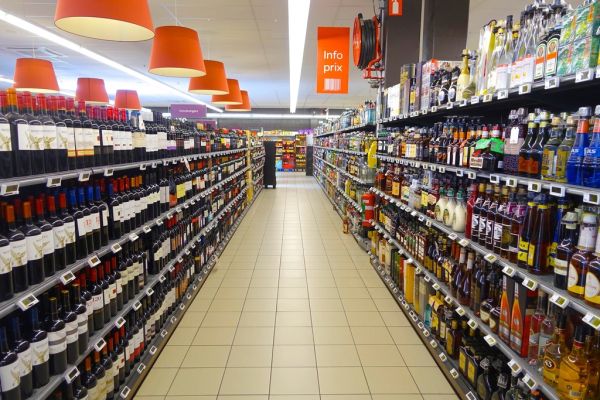
Grocery inflation cooled through the summer. It is heading back up. The October price data and a new industry forecast released this week point the same way: food prices rise faster than average for at least the next four to five months. At the same time, the discount grocers are opening stores at a record pace and the consolidation of New York’s independent chains continues. For anyone who owns or leases a supermarket-anchored center in the New York metro, here is what the data says and what to do with it.
1. The price data turned in October
The Bureau of Labor Statistics reported that food-at-home prices rose 0.4% in October from September. That is the biggest monthly increase since April. The BLS did not publish a year-over-year figure because October 2025 data was never collected during the federal shutdown, so the monthly number is the one to watch.
+0.4%Food-at-home prices, October vs. September. Fastest since April.
$6.13Average diesel price per gallon, up 60% from $3.84 a year ago (EIA)
+8%Lettuce prices in one month. Fresh vegetables up more than 2%.
~5 ptsWhat a 0.4% monthly pace adds to annual grocery inflation if it holds
Speaking at a Food Industry Association (FMI) briefing, Cal Poly agribusiness professor Ricky Volpe said he expects food prices to keep rising faster than average into early 2027. “It would surprise me to see food prices go flat or trend down in the next four or five months,” he said. The drivers are diesel, a strong El Niño that threatens palm oil, rice, cocoa and coffee supply, and a producer price index that has been climbing for months. FMI’s Andy Harig put the lag plainly: “It can take months for them to show up in grocery prices, which we are now witnessing.”
2. The shopper is trading down, and the discounters are building
FMI’s latest Grocery Shopper Trends survey shows who is paying for this. Sixty-two percent of shoppers say their income is not keeping up with inflation. More than 70% say they are managing, but only by sticking to a budget. That is the profile of a shopper who switches banners, buys private label and drives farther for a lower basket.
62%Shoppers who say income is not keeping up with inflation (FMI)
10Aldi store openings in October alone (Supermarket News)
52Food Bazaar stores today, up from 38 after converting 14 Western Beef supermarkets
800+Additional Aldi stores planned nationally by the end of 2028
The retailers built for that shopper are the ones growing in our market. Aldi opened 10 stores in October and is roughly a third of the way through a plan to add more than 800 stores nationally by 2028, including its largest New York City store near Times Square. Closer to home, Bogopa Service Corp., the parent of Food Bazaar, converted 14 Western Beef supermarkets between October 15 and 28, including the Elmont, Roosevelt, West Hempstead and Carle Place stores in Nassau County. Food Bazaar now runs 52 locations. Western Beef keeps five. The boxes never went dark; the banner changed. That is the pattern to expect when prices rise: the value operators absorb the market share and the real estate.
3. The big-box read-through: price is doing the work, not traffic
Home Depot reported third-quarter results this morning, and the shape of the numbers tells the same story from a different aisle. Sales rose 4.9% to $43.4 billion and comparable sales rose 2.2%. But customer transactions fell 0.2% while the average ticket rose 3.0% to $93.09. In other words, the comp came entirely from price and mix. The company now guides to roughly 1.4% comparable sales growth for the full year and about 15 new stores.
+2.2%Home Depot Q3 comparable sales
+3.0%Average ticket, to $93.09
-0.2%Customer transactions
~15New stores guided for fiscal 2026
When a 2,372-store retailer with Home Depot’s credit tells you its growth is ticket and not trips, assume the same is true for the in-line tenants in your center. Sales reports will look fine. Traffic will not. Landlords who rely on gross sales reporting to judge tenant health should look at transaction counts and foot traffic data before they look at the top line.
“Rising grocery prices are not good news for a supermarket, and they are not automatically good news for its landlord either. Percentage rent goes up, but so does the pressure on every in-line tenant whose customer just spent more on food. The centers that hold up are the ones anchored by the operators shoppers trade down to. That is where we are spending our time.”
— Kenneth R. Schuckman, President, Schuckman Realty Inc.
4. What to do with this before year-end
- Re-check your percentage rent breakpoints. If grocery inflation runs at the October pace, a supermarket’s gross sales can rise 4% to 5% on price alone. A natural breakpoint set in 2022 may be within reach in 2027. Know where each anchor stands against it.
- Expect the cost conversation in every anchor negotiation. Operators will cite diesel, labor and product cost when they push back on rent steps and CAM. Have your own numbers ready: trade-area income, competitor rents and the sales-per-square-foot the box actually produces.
- Lean into the trade-down tenants. Aldi, Food Bazaar, Bingo, Grocery Outlet, Five Below, Burlington, Ross and the dollar formats are the operators adding stores into this cycle. They want second-generation boxes with parking. Most Nassau and Queens supermarket boxes between 18,000 and 60,000 square feet fit that list.
- Watch the five remaining Western Beef stores. Any independent chain that just sold most of its fleet is a candidate for the rest. Landlords of those boxes should already know who the next operator is.
- Judge tenant health by transactions, not just sales. Ask for traffic counts. Compare them to last year. A flat transaction count with rising sales is inflation, not growth.
Grocery inflation is back. The data says it stays for a few months at least. The centers that come through it best will be the ones whose anchors are the stores people switch to, not the stores they switch from.
Sources
- Grocery Dive, “Grocery inflation is set to go up as input costs rise,” Nov. 16, 2026. Link
- Grocery Dive / Retail Dive, “Grocery inflation rises, driven by produce and meat,” Nov. 12, 2026 (BLS October CPI, released Nov. 10). Link
- The Home Depot, “Third Quarter Fiscal 2026 Results,” Nov. 17, 2026. Link
- Supermarket News, “5 things top news: Aldi goes on an opening spree,” Nov. 16, 2026. Link
- Long Island Press, “Food Bazaar set to expand with Western Beef acquisition,” Nov. 16, 2026; Herald Community Newspapers, Nov. 13, 2026; NewsChunks, Nov. 4, 2026 (store list). Link
- TheStreet, “Aldi makes major move targeting rivals Kroger, Trader Joe’s,” Sept. 2025 (Aldi national expansion plan). Link

Kenneth R. Schuckman is President of Schuckman Realty Inc., a retail-focused commercial real estate brokerage founded in 1978 and based on Long Island, and Co-Founder and Principal of BTF Capital Fund. SRI specializes in supermarket-anchored shopping centers across the New York metro area and maintains a proprietary signed-lease comparables database going back 48 years. Contact: ken@schuckmanrealty.com · 516.496.8888.