
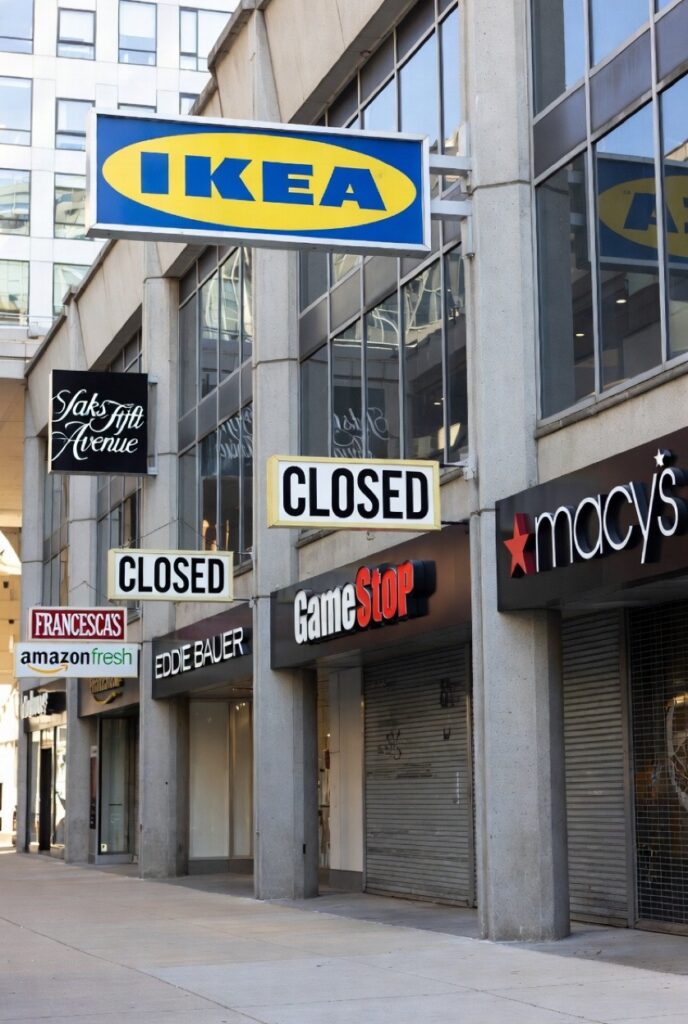
As the retail sector continues to evolve in response to economic pressures, shifting consumer behaviors, and the rise of e-commerce, 2026 is shaping up to be a pivotal year for brick-and-mortar stores. A recent report from Money Talks News highlights 13 major retailers announcing significant store closures, including household names in fashion, furniture, groceries, and more. At Schuckman Realty, we specialize in retail real estate leasing and development across the New York metropolitan area and beyond. We’ve seen cycles like this before, and while closures can signal challenges, they also create prime opportunities for repositioning properties, attracting new tenants, and revitalizing shopping centers.
In this blog post, we’ll break down the key closures outlined in the report, explore their implications for the commercial real estate market, and share insights on how landlords, investors, and retailers can adapt and thrive.
Key Retailers Closing Stores in 2026
The report details a mix of bankruptcy-driven liquidations and strategic restructurings. Here’s a summary of the most notable announcements:
- Ikea: Closing its Memphis, Tennessee location on May 3, 2026, as part of a strategic shift to focus on high-growth markets. This is a rare move for the Swedish giant, which is otherwise expanding with new formats.
- Saks Fifth Avenue and Saks Off 5th: Under Saks Global’s Chapter 11 bankruptcy, eight Saks Fifth Avenue stores and about 57 Saks Off 5th outlets are shutting down. Affected locations include Birmingham, AL; Columbus, OH; and Phoenix, AZ.
- Neiman Marcus and Neiman Marcus Last Call: Also part of Saks Global, the Boston, MA store at Copley Place is closing, along with all remaining Last Call outlets, eliminating the discount division.
- Francesca’s: All approximately 400 stores are closing following a second Chapter 11 filing, with liquidation sales already underway.
- Eddie Bauer: Potentially closing all 175 U.S. and Canada stores by April 30, 2026, unless a buyer emerges during bankruptcy proceedings.
- Amazon Fresh and Amazon Go: Amazon is pulling back from physical groceries, closing its Fresh supermarkets and Go convenience stores, with most gone by early February (California locations lasting longer).
- GameStop: Accelerating closures with over 470 stores shutting down nationwide, particularly in states like California, Florida, and Ohio.
- Macy’s: Continuing its optimization plan by closing 14 stores in Q1 2026, including sites in Atlanta, GA; Raleigh, NC; and Tukwila, WA.
- Kroger: Planning to close 60 underperforming stores over 18 months through 2026, spanning states from California to Wisconsin.
- Foot Locker: On track to close 400 stores by year-end, focusing on exiting low-traffic malls in favor of off-mall “power stores.”
These closures span luxury, discount, specialty, and essential retail categories, underscoring that no segment is immune. Even grocery chains like Kroger and Amazon Fresh are reevaluating their physical footprints amid cost-cutting and digital pivots.
Implications for the Retail Real Estate Market
From our vantage point at Schuckman Realty, these announcements reflect broader trends we’ve been tracking:
- Mall and Shopping Center Repositioning: With chains like GameStop, Macy’s, and Foot Locker pulling out of malls, vacancies in secondary and tertiary markets could rise. However, this opens doors for experiential retail, entertainment concepts, or mixed-use developments. We’ve successfully leased spaces to fitness centers, medical offices, and pop-up experiences in similar situations.
- Opportunities in Grocery-Anchored Centers: Closures at Kroger and Amazon Fresh highlight the need for resilient anchors. Properties in strong demographic areas can attract replacements like Aldi, Trader Joe’s, or regional grocers. Our team has expertise in negotiating leases for these essential tenants, ensuring steady foot traffic.
- Luxury and Discount Shifts: The Saks and Neiman Marcus moves signal a consolidation in high-end retail, potentially benefiting premium malls. Conversely, the loss of outlets like Saks Off 5th and Last Call could drive demand for value-oriented spaces.
- Regional Impacts: Many closures are concentrated in the South and Midwest, but Northeast markets (e.g., New Jersey, New York, Pennsylvania) are also affected. In our core areas, we’ve seen quick turnarounds by backfilling with e-commerce-resistant categories like beauty, dining, and services.
Overall, while the report paints a picture of contraction, the retail apocalypse narrative is overstated. E-commerce growth is stabilizing, and physical stores remain vital for omnichannel strategies. Data from ICSC (International Council of Shopping Centers) shows that vacancy rates are holding steady at around 5-7% in prime locations, with adaptive reuse on the rise.
How Schuckman Realty Can Help
At Schuckman Realty, we’ve been at the forefront of retail real estate for decades, representing landlords and tenants in deals that turn challenges into successes. If you’re a property owner facing potential vacancies from these closures, our leasing experts can identify and secure new tenants tailored to your market. For retailers looking to expand, we have exclusive listings on prime spaces becoming available.
Key tips from our experience:
- Act quickly on gift cards and loyalty programs if you’re a consumer—these often expire during liquidations.
- For investors, focus on properties with strong fundamentals: good visibility, parking, and demographics.
- Consider sustainability: Tenants increasingly seek energy-efficient spaces, which can command premium rents.
If you’d like to discuss specific opportunities or need a market analysis for your portfolio, contact us today at info@schuckmanrealty.com or visit our website for current listings.
Stay tuned to our blog for more insights on retail trends, leasing strategies, and market updates. Follow us on X at @KennethSchuckm1 for real-time commentary.